
20 Woodside Road
Ardmore, PA 19003
Pet Heat Safety: How to Protect Your Dog or Cat from Heat Stroke This Summer








Summer means sunshine, outdoor adventures, and longer days, but for our pets, rising temperatures can quickly become dangerous. At Main Line Urgent Vet, we see an increase in heat-related emergencies every year as temperatures climb.
Knowing the signs of heat exhaustion in dogs and cats, understanding how to prevent pet heat stroke, and recognizing when your pet needs immediate veterinary care can save their life.
Can Dogs and Cats Get Heat Stroke?
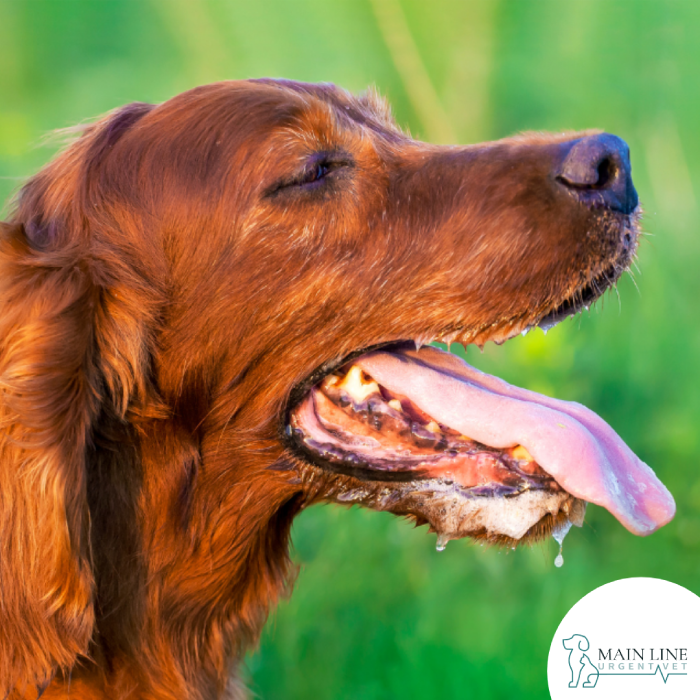
Absolutely. Heat stroke in pets occurs when your dog or cat’s body temperature rises faster than they can cool themselves down. Unlike humans, pets cannot sweat efficiently and primarily rely on panting, limited sweat glands, and external cooling to regulate their body temperature. This makes them especially vulnerable during hot, humid weather.
Heat stroke is a life-threatening emergency that can lead to dehydration, organ failure, seizures, and even death if not treated quickly.
Pets Most at Risk for Heat Stroke
While any pet can overheat, some are at higher risk for heat stress in dogs and cats, including:
Flat-faced breeds like French Bulldog, Pug, and Persian Cat
Senior pets
Puppies and kittens
Overweight pets
Pets with heart or respiratory disease
Thick-coated breeds
Pets not acclimated to warmer temperatures
These pets may struggle to regulate body temperature even on moderately warm days.
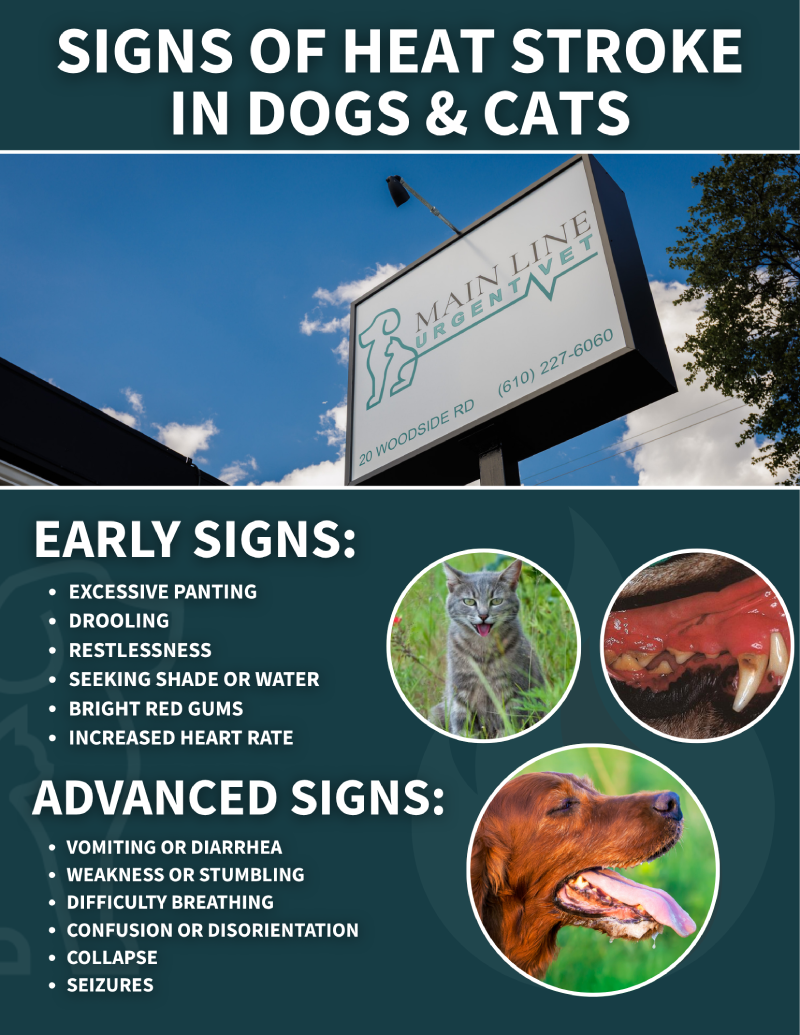
If your pet shows any of these symptoms, bring them to Main Line Urgent Vet immediately. Heat stroke can progress rapidly.
How to Prevent Heat Stroke in Pets
1. Walk During Cooler Hours
Schedule walks early in the morning or later in the evening when temperatures are lower.
2. Test the Pavement
Hot asphalt, concrete, and artificial turf can burn your pet’s paw pads. If it’s too hot for your hand, it’s too hot for their paws.
3. Always Provide Fresh Water
Hydration is essential during warm weather.
4. Never Leave Pets in a Car
Even with windows cracked, temperatures inside a vehicle can rise dangerously fast.
5. Limit Outdoor Exercise
High humidity can make it difficult for pets to cool themselves, even if temperatures don’t seem extreme.
6. Offer Shade and Ventilation
Whether indoors or outdoors, pets need cool, shaded, well-ventilated spaces.
Community pet owners consistently share one important reminder: don’t wait until your pet looks exhausted. Many dogs will continue playing past their limits.
What To Do If Your Pet Is Overheating
If you suspect your pet is suffering from heat exhaustion or heat stroke:
1. Move them immediately to a cool area
2. Offer small amounts of cool water
3. Use cool (not ice-cold) water on their paws, belly, and body
4. Turn on fans or air conditioning
5. Contact Main Line Urgent Vet right away
Even if your pet appears to recover, internal damage may still be occurring. Veterinary evaluation is strongly recommended.
When to Visit Main Line Urgent Vet for Pet Heat Stroke
Heat stroke is always an emergency.
Bring your pet to Main Line Urgent Vet immediately if your dog or cat is:
Collapsing
Vomiting repeatedly
Having trouble breathing
Unable to stand
Disoriented
Experiencing seizures
Prompt treatment, including IV fluids, oxygen support, and temperature stabilization, can make all the difference.
Keep Your Pets Safe This Summer
Summer should be full of tail wags, adventures, and sunshine, not emergency visits. By practicing pet heat safety, recognizing the signs of dog heat stroke and cat overheating, and acting quickly when something feels off, you can help your pet stay safe all season long.
If your pet is showing signs of overheating, the team at Main Line Urgent Vet is here when your family veterinarian is unavailable.
Stay safe, stay cool, and give your pets extra water and shade this summer.☀🐾
Quick Links
All Services
Learn More
Keep
In Touch
© 2026 Main Line Urgent Vet. All rights Reserved - Accessibility Statement - Privacy Policy - Sitemap
Powered by
